
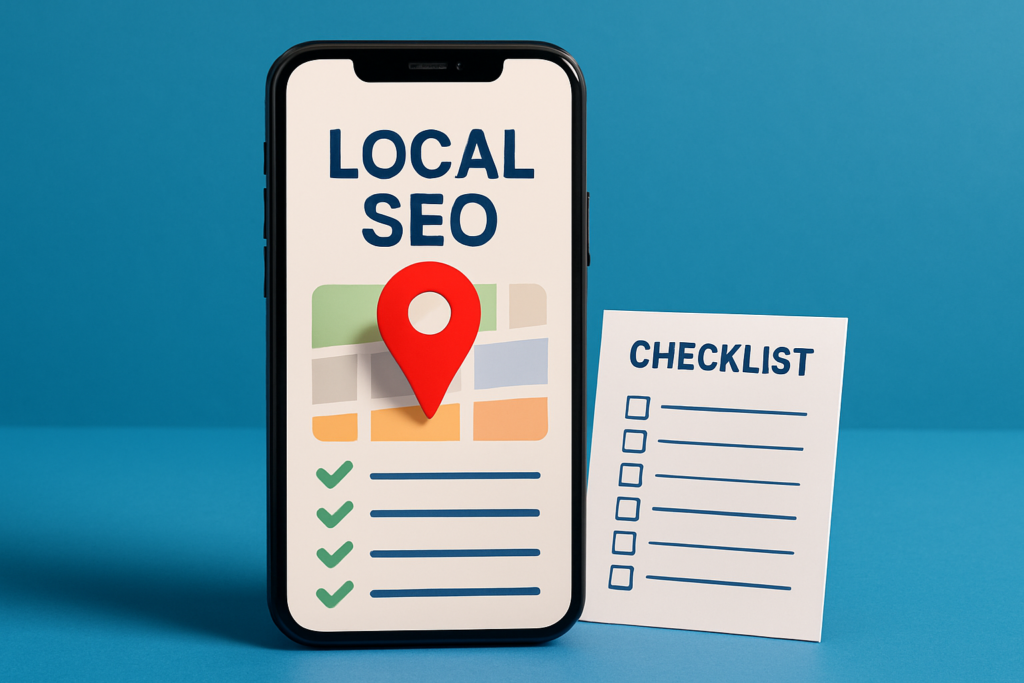
If you are serious about on page local seo optimization vancouver, you are already asking the right question: what will actually move your business into the Google Maps local pack and turn clicks into calls. The truth is simple yet often overlooked. Your website sends powerful local signals that either reinforce or confuse what your Google Business Profile says about you. When those signals align, you earn trust, you win visibility, and your phone starts ringing from people nearby who are ready to buy. In the guide below, Marketing Vancity breaks down a technical 12-step checklist any Vancouver business can implement, whether you serve Kitsilano, Mount Pleasant, Gastown, or the North Shore.
On Page Local SEO Optimization Vancouver: Why It Matters Now
Local search is intent-rich and fast-moving, which means small improvements can create outsized results for your bottom line. Industry research suggests nearly half of all Google searches have local intent, and a significant share lead to contact or a store visit within a day, especially on mobile devices. If your pages do not explicitly tell search engines and people what you do, where you do it, and why they should trust you, more prominent competitors will absorb that demand. Think of your site as the authoritative storefront sign for the entire internet, visible from East Van to Richmond and beyond.
Beyond visibility, on-page work sets the foundation for every other tactic you undertake. Ads get cheaper to convert when your landing pages match local queries. Reviews carry more weight when your service pages echo the same value propositions. Even social engagement performs better when people land on pages that validate what they just saw on their feeds. Marketing Vancity specializes in aligning these moving parts so Vancouver businesses send a coherent, consistent message across website content, Google Business Profile, and social channels.
What Google Looks For: Local Ranking Signals You Can Control
Search engines evaluate relevance, distance, and prominence. While you cannot move your building closer to a searcher, you can control relevance and perceived prominence with rigorous on-page optimization. That is where structured data, semantic headings, internal linking, and neighborhood language come in. It also pays to show real-world proof, like service menus and reviews, directly on your site. Before you dive into the 12-step checklist, review the quick matrix below to see which signals map to actions you can take this week.
| Ranking Factor | On-Page Signal | Vancouver Tip | Expected Outcome |
|---|---|---|---|
| Relevance to Query | Title tags, H1–H3, body copy aligned with services and areas | Reference neighborhoods like Yaletown, West End, Commercial Drive naturally | Higher match for local keywords and “near me” searches |
| Prominence and Trust | Reviews on site, LocalBusiness schema, staff bios, awards | Showcase local media mentions and community involvement | Improved credibility and click-through rate (CTR) (Click-Through Rate) |
| Website Quality | Fast Core Web Vitals, mobile usability, HTTPS | Optimize for rain-or-shine mobile users navigating transit or traffic | Better engagement signals that reinforce rankings |
| Location Signals | Consistent Name, Address, Phone Number (NAP), embedded map, driving directions | Use BC postal codes and local landmarks in copy where relevant | Clear geographic relevance for Maps and organic results |
12-Step Technical Checklist You Can Implement This Week

-
Lock Down Your Name, Address, Phone Number (NAP) Consistency.
Ensure your Name, Address, Phone Number (NAP) is identical across your website header, footer, contact page, and any location pages. Use a single, crawlable text format rather than images to avoid parsing errors. Mirror that exact formatting in your Google Business Profile and major directories so algorithms view your entity as stable. A simple misprint in a suite number or a swapped digit can fracture authority, especially across the Lower Mainland where many businesses share similar street names.
-
Engineer Hyper-Relevant Title Tags and Meta Descriptions.
Write human-first, location-aware titles that include your service and the city or neighborhood, such as “Emergency Plumber in Mount Pleasant | 24-7 Service.” Keep titles under about 60 characters and meta descriptions under about 155 characters for consistent display. Avoid stacking multiple cities in one title because it dilutes relevance. For multi-location brands, generate unique titles per page that reflect the exact service area and offer, then test for improved click-through rate (CTR) (Click-Through Rate) in search results.
-
Use a Clear Heading Hierarchy With Local Language.
Structure each page with one H1 that states the main topic, supporting H2s for service sections, and H3s for details. Sprinkle in neighborhood cues naturally, like “Furnace Repair for Kitsilano Heritage Homes,” but never force awkward keyword stuffing. A clean hierarchy helps search engines understand context and helps busy Vancouverites scan quickly on mobile devices, especially during commute windows.
-
Implement LocalBusiness Structured Data Correctly.
Add schema markup for LocalBusiness with fields for Name, Address, Phone Number (NAP), opening hours, service area, and geocoordinates. Include sameAs links to your Google Business Profile, Facebook, Instagram, and relevant local directories. When eligible, mark up product or service details and aggregate ratings. This machine-readable layer reinforces the real-world facts about your business and can unlock rich results that boost trust at a glance.
-
Align Your Website With Your Google Business Profile.
Point your Google Business Profile to the most relevant page, not always the homepage. Mirror primary category, services, and descriptions between the profile and your site content. Publish weekly posts on your Google Business Profile and reflect those updates on a news or blog section to send consistent recency signals. When your website and profile tell the same story, you reduce ambiguity and increase eligibility for the local 3-pack.
-
Build Focused Location Pages and Vancouver Neighborhood Hubs.
Create separate pages for high-demand areas you truly serve, like “Window Cleaning in Yaletown” or “Dental Implants in Kerrisdale,” and write unique content for each. Include driving directions from a recognizable landmark, nearby transit options, and localized FAQs. Avoid thin, templated pages that only swap a place name. A better approach is to feature recent projects, local testimonials, and neighborhood-specific pain points that prove relevance.
-
Tune Internal Links and Navigation for Local Intent.
Use descriptive anchor text that reflects services and areas, such as “Heat Pump Upgrades in Burnaby” linking to the appropriate page. Add breadcrumb navigation so users and crawlers can understand site structure, and ensure your header and footer link to your most profitable service and location pages. This reduces orphaned content and helps distribute authority where it matters most.
-
Improve Speed and Core Web Vitals.
Compress images, defer non-critical scripts, and serve modern formats to pass Largest Contentful Paint (LCP) (Largest Contentful Paint), Interaction to Next Paint (INP) (Interaction to Next Paint), and Cumulative Layout Shift (CLS) (Cumulative Layout Shift) thresholds. Many local searches happen on mobile in less-than-ideal network conditions, so every millisecond counts. Faster pages reduce bounce, increase conversions, and send positive quality signals that support stronger local rankings.
-
Make Conversions Effortless on Mobile.
Place a prominent tap-to-call button, add sticky “Get a Quote” elements, and ensure forms ask only for essential fields. Use “tel:” and “mailto:” links so users can reach you instantly, and display your hours clearly with today’s status highlighted. Consider a compact price guide or eligibility checker for services with common questions, which can turn curiosity into action while the intent is hot.
-
Embed a Map, Add Directions, and Use Landmarks.
Place a Google map embed on your contact or location page along with written directions from major routes like Highway 1, Granville Street, or the Cambie Bridge. If you have parking or accessibility details, write them out. This helps users and also provides geographic context that algorithms can parse, reinforcing how your site, profile, and the physical world connect.
-
Showcase Reviews and Social Proof On-Page.
Display a curated, fresh selection of reviews and mention the neighborhoods or project types involved. Mark them up with appropriate structured data when applicable, and link to your full Google reviews for transparency. Social proof on the page echoes what people see on your profile and social feeds, which boosts persuasion and reduces friction before they contact you.
-
Instrument Tracking the Right Way.
Add Urchin Tracking Module (UTM) parameters to your Google Business Profile website link when you want to separate traffic sources in Google Analytics 4 (GA4) (Google Analytics 4). Set up call tracking that preserves your canonical phone number in the code while displaying a dynamic number visually, so you keep Name, Address, Phone Number (NAP) consistent for crawlers. Monitor coverage, sitemaps, and performance in Google Search Console (GSC) (Google Search Console) to confirm that your changes are being crawled and indexed as intended.
Content and Conversion: Turn Local Visitors into Real Leads
Your pages should answer the next three questions a Vancouver buyer will ask after finding you: how much, how soon, and how exactly. Replace vague claims with simple tables, transparent timelines, and step-by-step processes. Add at least one clear Call to Action (CTA) (Call to Action) per screen, then repeat key CTAs at the end of each section for scanners. Want an extra lift? Include a “Why Vancouver Chooses Us” block that ties your offer to local realities like winter rain, condo bylaws, or heritage home considerations.
Here is a quick reference you can adapt to your site structure today.
| Page Type | Primary Conversion Element | Trust Signal to Add | Notes |
|---|---|---|---|
| Service Page | Sticky “Get a Quote” button and 60-second form | 3 recent Vancouver reviews with first names and neighborhood | Use before-and-after descriptions for clarity |
| Location Page | Tap-to-call with hours, map, and parking info | Photo of storefront or team, marked up with structured data | Include transit details and a local landmark |
| Blog/Guide | Lead magnet or booking link | Author bio and citations to credible sources | Answer neighborhood-specific FAQs |
Measure What Matters: Benchmarks, Tools, and Reporting
Tracking makes your wins repeatable and your gaps obvious. Start by grouping keywords by intent, such as “emergency,” “maintenance,” and “cost,” then map them to specific pages. Use Google Analytics 4 (GA4) (Google Analytics 4) to monitor calls, form submissions, and tap-to-call events, and check Google Search Console (GSC) (Google Search Console) to find queries that already trigger impressions but need better rankings. Regular performance analysis keeps you honest, focused, and ready to seize quick wins.
The table below lists practical targets many Vancouver businesses can aim for. Your context may differ, but these ranges are realistic for healthy local sites.
| Metric | Where to Track | Good Starting Goal | Optimization Notes |
|---|---|---|---|
| Organic Click-Through Rate (CTR) (Click-Through Rate) for target pages | Google Search Console (GSC) (Google Search Console) | 3–6 percent for non-branded terms | Iterate titles and meta descriptions with value props and locality |
| Conversion Rate from local landing pages | Google Analytics 4 (GA4) (Google Analytics 4) | 8–15 percent depending on service | Simplify forms and add immediate contact options |
| Largest Contentful Paint (LCP) (Largest Contentful Paint) | PageSpeed Insights | Under 2.5 seconds | Compress hero images and preload critical assets |
| Google Maps calls and direction requests | Google Business Profile Insights | Month-over-month growth | Post weekly and match services to the website |
Real-World Vancouver Example: How Marketing Vancity Moves the Needle
A Kitsilano dental clinic came to Marketing Vancity with sporadic visibility and inconsistent contact details scattered across pages and listings. We standardized the Name, Address, Phone Number (NAP), rewrote location-aware titles, added LocalBusiness structured data, and built distinct service pages for “Invisalign in Kitsilano” and “Dental Implants near Jericho Beach.” Within a few weeks of indexing, their organic click-through rate (CTR) (Click-Through Rate) improved as titles resonated more, and calls from Google Maps rose steadily as their Google Business Profile matched the site’s language.
Because local buyers act fast, we also added tap-to-call on mobile, a one-minute financing explainer, and a compact pricing FAQ for top procedures. This combination of technical clarity and user empathy strengthened signals across search results, Maps, and social referrals. Consistent with findings from multiple industry studies, better relevance and speed translated into higher engagement and more booked appointments. While every business is unique, the playbook works just as well for a Commercial Drive café, a Burnaby HVAC company, or a West End boutique that wants to be discovered by the right customers at the right moment.
Quick Reference: Your 12-Step Checklist and Tools
Use this compact plan as you work through the actions above. Consider keeping it open in a second tab while you implement each step on your site and Google Business Profile.
| Step | Action | Helpful Tool | Primary Outcome |
|---|---|---|---|
| 1 | Unify Name, Address, Phone Number (NAP) across pages | Sitewide search, spreadsheet tracker | Stronger entity consistency |
| 2 | Rewrite titles and meta descriptions with locality | Google Search Console (GSC) (Google Search Console) | Higher relevance and clicks |
| 3 | Fix heading hierarchy and add neighborhood cues | Web inspector, accessibility checker | Clear topical structure |
| 4 | Add LocalBusiness schema | Schema generator, Rich Results Test | Machine-readable business facts |
| 5 | Align site content with Google Business Profile | Profile manager, content calendar | Consistency across properties |
| 6 | Create unique location pages | Keyword tool, analytics | Geo relevance and coverage |
| 7 | Improve internal linking and breadcrumbs | Crawler, sitemap validator | Better crawl and authority flow |
| 8 | Speed up pages and pass Core Web Vitals | PageSpeed Insights, Lighthouse | Lower bounce, higher conversions |
| 9 | Optimize mobile conversions | Device testing, heatmaps | More calls and form fills |
| 10 | Embed map and write directions | Google Maps | Clear location signals |
| 11 | Show on-page reviews with context | Review aggregator, schema validator | Stronger persuasion |
| 12 | Set up Urchin Tracking Module (UTM) tracking, GA4, and GSC | Google Analytics 4 (GA4) (Google Analytics 4), Google Search Console (GSC) (Google Search Console) | Reliable reporting and insights |
Marketing Vancity offers end-to-end support for each of these steps, from the nitty-gritty of schema and internal link audits to content strategy and social media presence enhancement. By focusing on targeted SEO (Search Engine Optimization) strategies and Google Business Profile optimization, Marketing Vancity helps businesses rank higher in local search results and attract more local customers. The team also provides regular performance analysis so you can see exactly how your improvements translate into leads and revenue, and where to double down next.
Bringing It All Together for Vancouver Businesses
Every tactic above is practical on its own, but the real gains appear when you implement them as a system. Your website clarifies who you are, your Google Business Profile amplifies that clarity to Maps users, and your social and content ecosystem adds the human proof that undecided buyers look for. When these pieces are orchestrated, your brand shows up more often, looks more credible, and makes it easier for locals to take the next step.
Here is a simple mental model to visualize. Picture a triangle with three sides labeled Website, Google Business Profile, and Community Proof. Your technical on-page work strengthens the Website side, which in turn stabilizes the other sides. Marketing Vancity acts like a seasoned builder, reinforcing each side with the right materials at the right time so the whole structure supports growth through every season in Vancouver.
Punchy Recap: Get your technical house in order and your pages will earn their way into Google Maps while converting more local visitors into paying customers. Imagine the next 12 months with a website that speaks fluently to Vancouver neighborhoods, a Google Business Profile that mirrors your messaging perfectly, and reporting that shows steady gains in calls and appointments. What is the single change you will make this week to start your on page local seo optimization vancouver journey?
Additional Resources
Explore these authoritative resources to dive deeper into on page local seo optimization vancouver.
Elevate On Page Local SEO Optimization Vancouver with Marketing Vancity
By focusing on targeted SEO (Search Engine Optimization) strategies and Google Business Profile optimization, Marketing Vancity helps businesses rank higher in local search results and attract more local customers.